
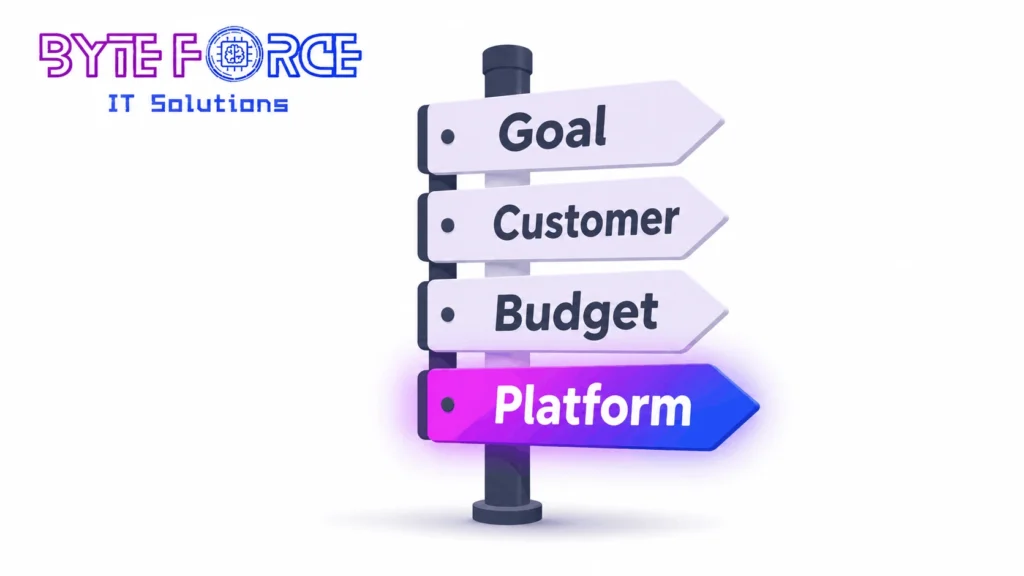
We choose the ad platform last, not first. First, we look at your goal, your customer, and your budget. Then we match one platform to that plan. Most business owners do it the other way around. They pick Facebook, TikTok, or Google because a friend uses it, and then they hope it works.
The pressure to pick fast is real. In a January 2026 survey of more than 1,500 small business owners, 68% said social posts and paid ads will bring them the most value in 2026, according to EMARKETER’s summary of the Constant Contact report. That is good news for ad platforms. It does not mean every platform fits your business.
Google gives the same hint. Google Ads Help tells advertisers to choose an objective first, such as sales, leads, or website traffic. Then Google shows the features that match that goal. The goal comes first. The platform comes second.
This guide shows you the exact steps we follow. You can use them today, even if you run a small team.
Why Most Businesses Pick the Wrong Ad Platform
Wrong picks cost money fast. Here are the five mistakes we see most often:
- They follow trends. A new app gets popular, so they rush to advertise there.
- They copy a competitor. What works for another brand may not work for yours.
- They spread the budget thin. Five platforms with a tiny budget each give you weak data on all five.
- They skip tracking. Without tracking, they cannot see which ad brings a call or a sale.
- They use weak creativity. A good platform cannot save a blurry image or a confusing message.
Notice that none of these mistakes are about the platform itself. They are about the plan behind it. Fix the plan, and the platform choice gets easy.
Our 5-Step Process for Choosing an Advertising Platform
Step 1: Set One Clear Goal
We ask one question first: what should happen after someone sees your ad?
Pick one main goal from this list:
- Get more phone calls
- Get more form leads
- Get more online sales
- Get more people to know your brand
- Get more visits to your store
One goal keeps the campaign sharp. When you chase four goals at once, no ad does a good job. If you have several goals, we run them one at a time.
Step 2: Know Your Customer Better Than the Platform Does
Every platform has an audience. Your job is to find out if your buyer lives there.
Ask these questions:
- How old is your best customer?
- Does this person search on Google when they need help?
- Does this person scroll social media for fun?
- Does this person use LinkedIn for work?
- Does this person watch videos before they buy?
Talk to your last five happy customers. Ask where they found you. Their answers often beat any guess. A person who needs a plumber at night searches on Google. A person who loves a new snack finds it on Instagram. The need decides the place.
Step 3: Map Your Buyer’s Journey
People do not buy at the same speed. We split them into three groups:
- Awareness: They do not know you yet. Short videos and social ads work well here.
- Consideration: They compare options. Search ads, reviews, and retargeting ads work well here.
- Decision: They are ready to act. Search ads with a clear call button work well here.
Most small businesses win fastest with people who already search for a solution. These buyers have a problem and want it fixed. If your budget is small, start there.
Step 4: Set a Budget You Can Keep Up
A good budget is one you can run for at least three months. Short bursts do not give the platform enough time to learn. They also do not give you enough data to make smart choices.
Here is a simple way to set your budget:
- Decide what one new customer is worth to you.
- Decide how much you can pay to win that customer.
- Divide your monthly budget by that number to see how many customers you need.
- Choose a platform where your goal looks possible at that cost.
If your budget feels tight, pick one platform and do it well. One platform with a strong plan beats four platforms with no plan.
Step 5: Fix Your Brand and Creative Before You Spend
This step surprises most people. Your ad is only as strong as the look and message people see. If your logo looks different on every ad, buyers lose trust. If your landing page looks messy, they leave.
Before we spend a single dollar on ads, we check three things:
- Does your logo and color style look the same everywhere?
- Does your ad say one clear thing in the first line?
- Does your landing page match the promise in the ad?
A strong graphic design service for ad creatives helps you pass all three checks. Good design makes people stop scrolling. A clear brand makes them trust you. This is why a branding service and an ad plan work best when they work together.
Not sure which goal or platform fits you? Talk to our team about your ad goals and we will help you pick a clear starting point.
Which Platform Fits Which Goal
Now that you have a goal, a customer, a journey, and a budget, the platform choice gets simple. Use this as a starting guide.
Google Ads: Best When People Already Search for You
People type what they need into Google. They often want to act soon. This makes Google a strong choice for calls, leads, and sales. If your buyer says “I need help with…” before they buy, start here.
Facebook and Instagram: Best for Stories, Local Reach, and Retargeting
Meta ads let you show pictures and short videos to a chosen group of people. They work well for awareness and for reminding visitors who left your website. Food, fashion, beauty, events, and local services often do well here.
TikTok: Best When Your Buyer Loves Short Video
TikTok rewards fresh, real, short videos. It can work if your buyer spends time there and your team can make new videos often. If you cannot make a video every week, think twice before you start.
LinkedIn: Best for Business Buyers
LinkedIn helps you reach people by job title and industry. Clicks often cost more here. It makes sense when one new customer brings a big sale, such as a service contract.
YouTube: Best for Trust and Teaching
People watch YouTube to learn. Ads and videos that explain a product can build trust before the buyer ever calls you. This works well for products that need a little explaining.
How to Start Small and Test
Pick one to three platforms at most. Then run a simple test.
- Choose one main goal.
- Write two versions of your ad. Change one thing only, such as the headline or the picture.
- Run both for two to four weeks.
- Check the cost for each lead or sale.
- Keep the winner and drop the loser.
This habit saves money. It also teaches you what your buyers like. Over time, your ads get better because you learn from real numbers, not guesses.
A strong digital marketing service for small businesses handles this testing for you, so you can focus on running your business.
Signs Your Platform Is Not Working
Give each test enough time. Then look for these warning signs:
- You get many clicks but no calls or leads.
- Your cost per lead keeps going up.
- Your buyers say they never saw your ad.
- Your ads reach the wrong age group or the wrong city.
- You cannot tell which ad brought a sale.
Do not blame the platform right away. First, check your tracking, your message, and your landing page. Most weak results start with those three. If all three look strong and the numbers still stay poor, try a different platform.
When to Add a Second Platform
Add a second platform only when the first one works well. Look for these signals:
- Your cost per lead stays steady month after month.
- You spend your full budget and still have room to grow.
- Your cost per click starts to rise.
At that point, a second platform can help you reach new buyers. Match it to the next stage of your buyer’s journey. For example, if search ads bring leads, add social ads to remind visitors who did not buy yet.
Why Choose Byte Force IT Solutions
Picking a platform takes more than a quick guess. It takes a plan, a clear brand, and ads that people want to click. That is the work we do every day at Byte Force IT Solutions.
We focus on two things that work best together: digital marketing and graphic design with branding. Many agencies split these jobs between different teams, so the ad message and the visuals drift apart. We keep them under one roof. Our team plans the campaign, designs the creative, and checks the results. Your ad, your logo, and your landing page all tell the same story.
We start every project with your goal, not with a platform. We listen first. Then we choose the channels that fit your customer and your budget, and we explain each step in plain words. You always know where your money goes and what it brings back. We work online with businesses that want clear marketing and clean design, so distance does not slow us down.
Whether you need a fresh brand, ad creatives that stand out, or a full campaign plan, we are ready to help. Call us at +971 50 250 7941 or reach out through our contact page to start the conversation.
Conclusion
The best advertising platform is the one your buyer already uses, matched to your goal and your budget. Start with one clear goal. Learn your customer. Match your platform to the buyer’s stage. Test small, track the numbers, and grow only when something works. When you follow this order, you stop guessing and start learning.